- 1
- BLACKL
- TABLETAPPLE iPad Mini 8NEW iPad A16(2025) iPad 10.9" 10th (2022) iPad 10.2" (7th/8th/9th) iPad Air 13" (M2/M3/M4)(2024/2025/2026)NEW iPad Air 11" (M2/M3/M4)(2024/2025/2026)NEW iPad Mini 8.3" (A7 Pro/6th Gen) iPad Pro13"(M4/M5)(2024/2025) iPad Pro11"(M4/M5)(2026) iPad 9.7" (5th/6th Gen) iPad Pro 12.9"(2018-2022) iPad Pro 11"(2018-2022) iPad 9.7"(2th/3th/4th) iPad Air 10.9"(4th/5th Gen) iPad Mini 7.9"(4th/5th Gen)SAMSUNG Galaxy Tab A11 Galaxy Tab A11 Plus Galaxy Tab S11 Galaxy Tab S12 PlusNEW Galaxy Tab S12 UltraNEW Galaxy Tab A9+ Galaxy Tab A9 Galaxy Tab A8 Galaxy Tab A7 Galaxy Tab A7 Lite Galaxy Tab S11 Ultra/S10 Ultra/S9 Ultra/S8 Ultra Galaxy Tab S10+/S9+/S9 FE+ Galaxy Tab S10Lite/S10 FE/S9 FE/S9 Galaxy Tab S8+/S7+/S7 FE Galaxy Tab S8/S7 Galaxy Tab S6 lite Galaxy Tab A10.1 Galaxy Tab A8.4 Galaxy Tab A8.0 Galaxy Tab S10 FE+LENOVO iDea tab 11/Tab K11 Gen 2 /Xiaoxin Pad 11 2025 Lenovo Tab K9 (Tab One) 2025 Lenovo Tab M10 10.1"(2025) Lenovo Tab M10 Plus 10.6" (3rd Gen) Lenovo Tab M10 HD 10.1" (3rd Gen) Lenovo K10/M10 Plus 10.3" (2nd Gen) Lenovo Tab M10 HD 10.1" (2nd Gen)XIAOMI Redmi Pad 2 9.7 InchNEW Xiaomi Pad8/8Pro 11.2" Redmi Pad2/Pad2.4G Xiaomi Pad 6/6 Pro 11" Redmi Pad 10.61" Redmi Pad Se 11" Redmi pad Se 4G 8.7" Xiaomi Pad7/7 Pro 11.2" Redmi Pad Pro/Xiaomi Poco Pad/Redmi Pad2 Pro 12.1HUAWEI Huawei Matepad Se 10.4" Huawei Matepad 11" Huawei Matepad 11.5" Huawei Matepad SE 11" Huawei Matepad T8 8" Huawei Matepad T10 9.7"
- CATEGORIES
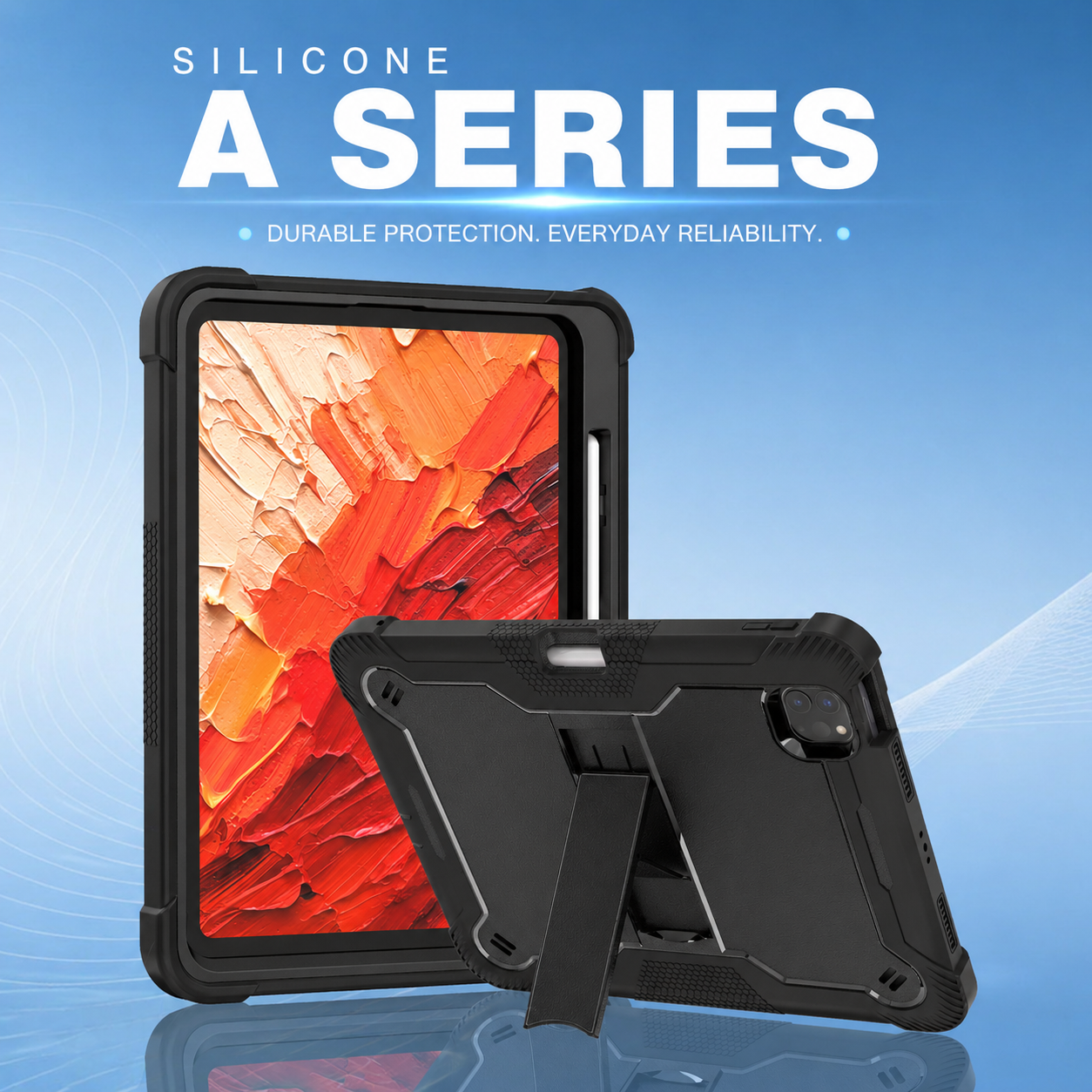
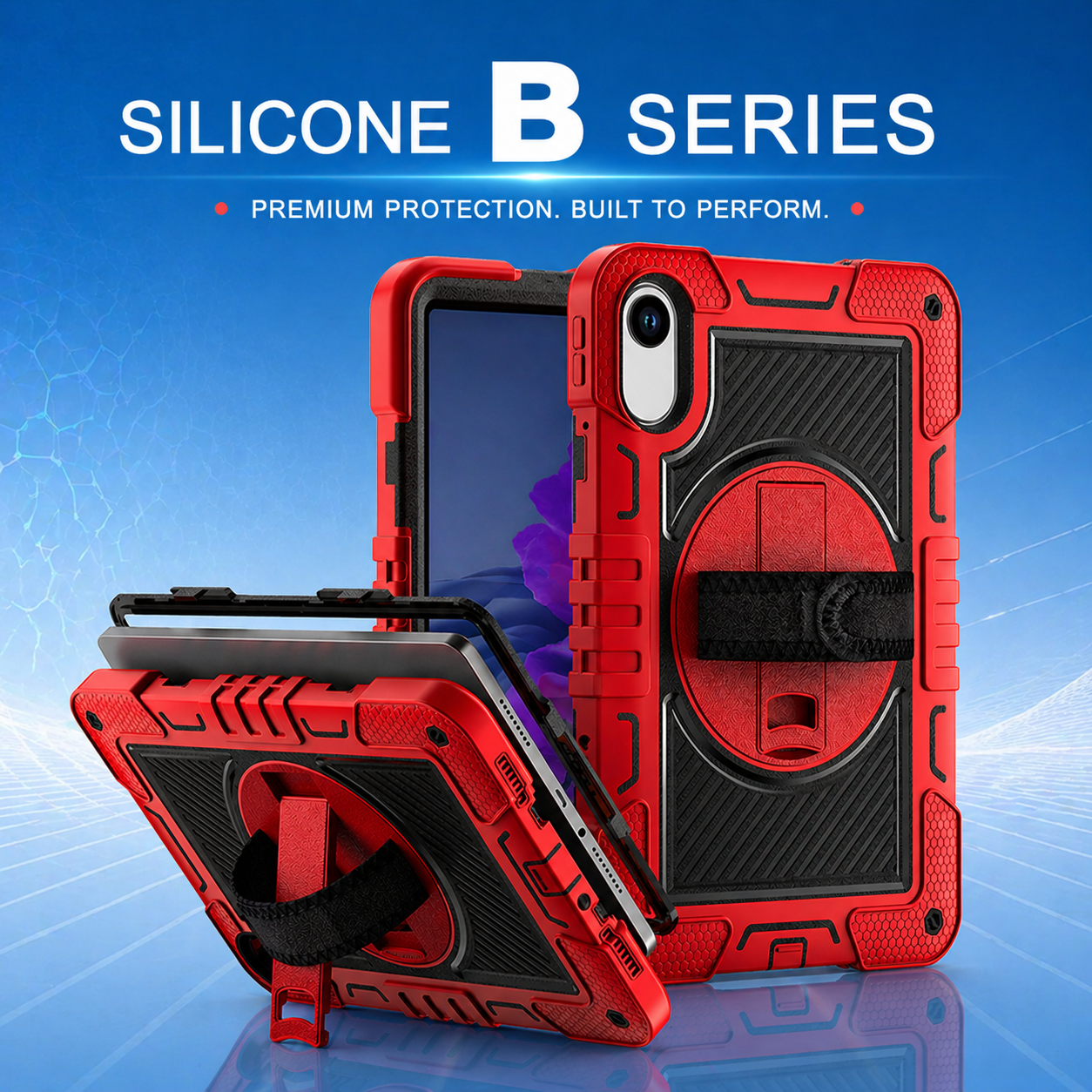
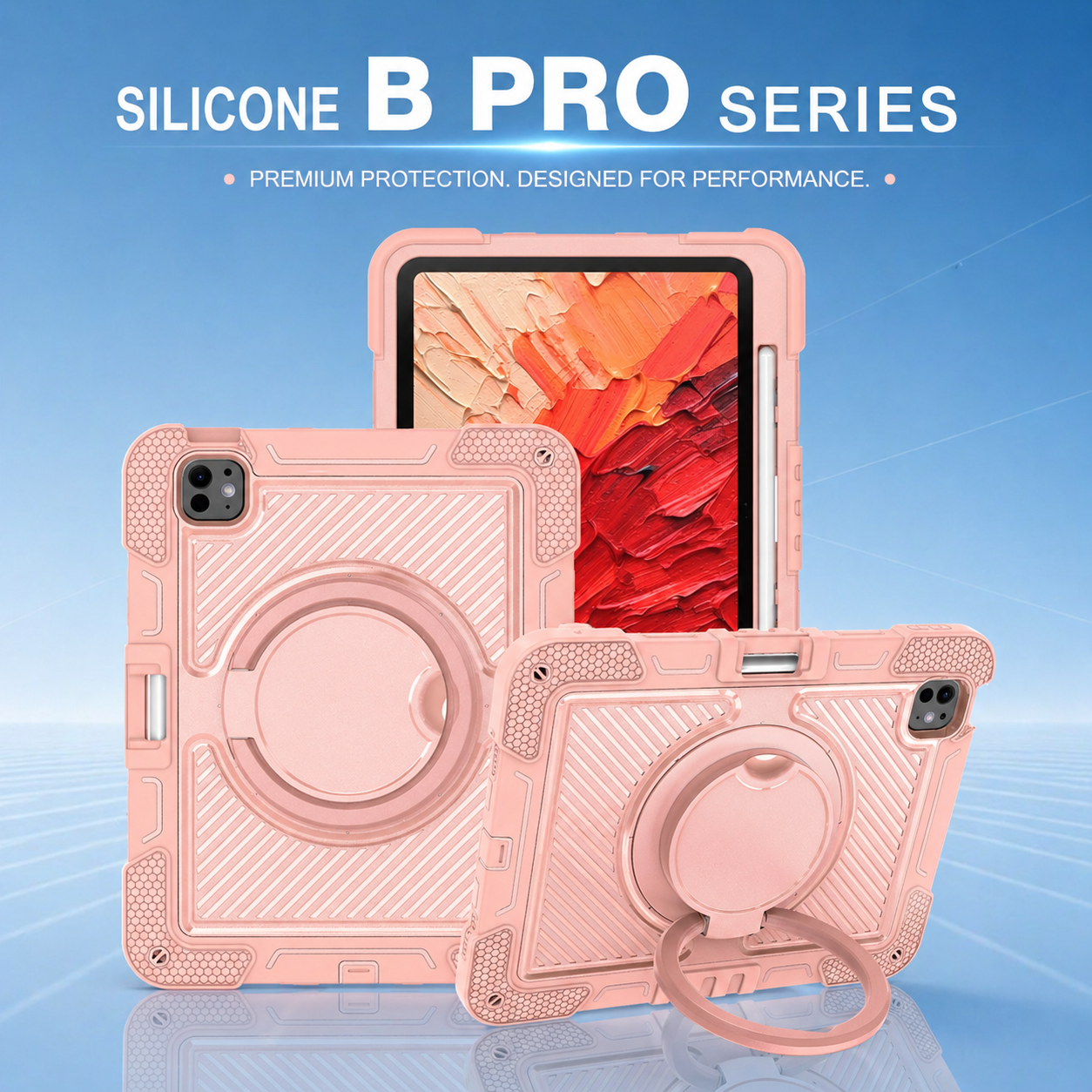
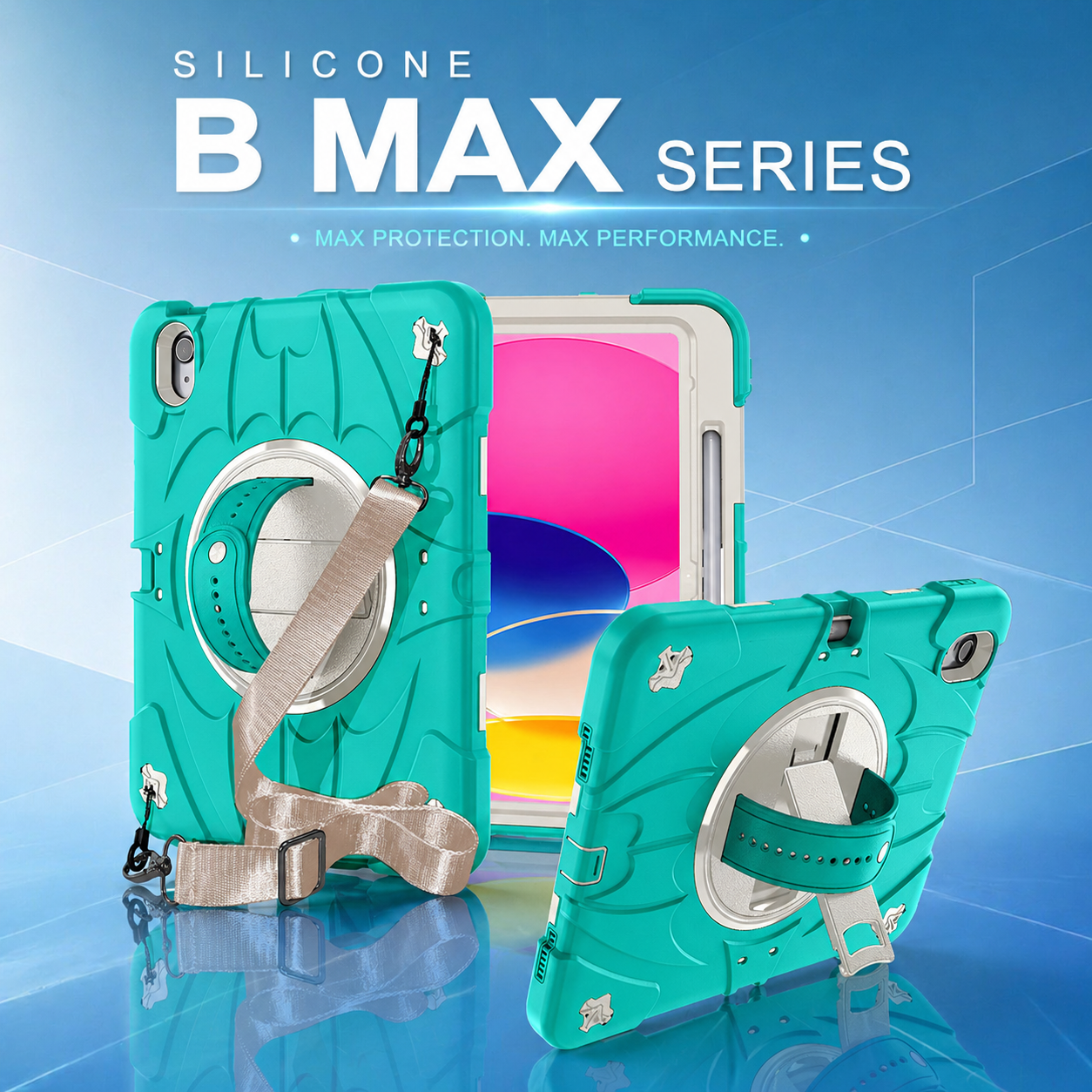
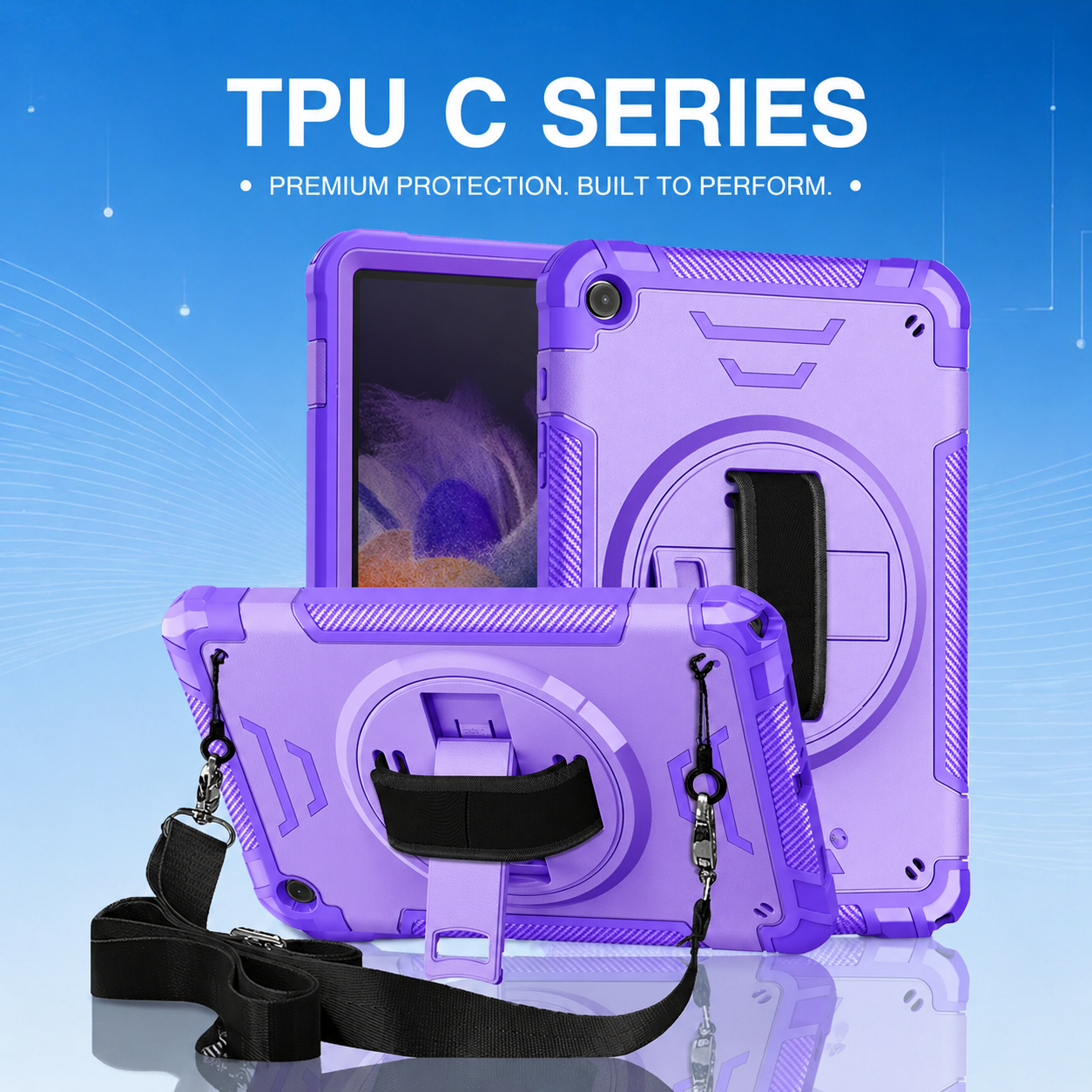
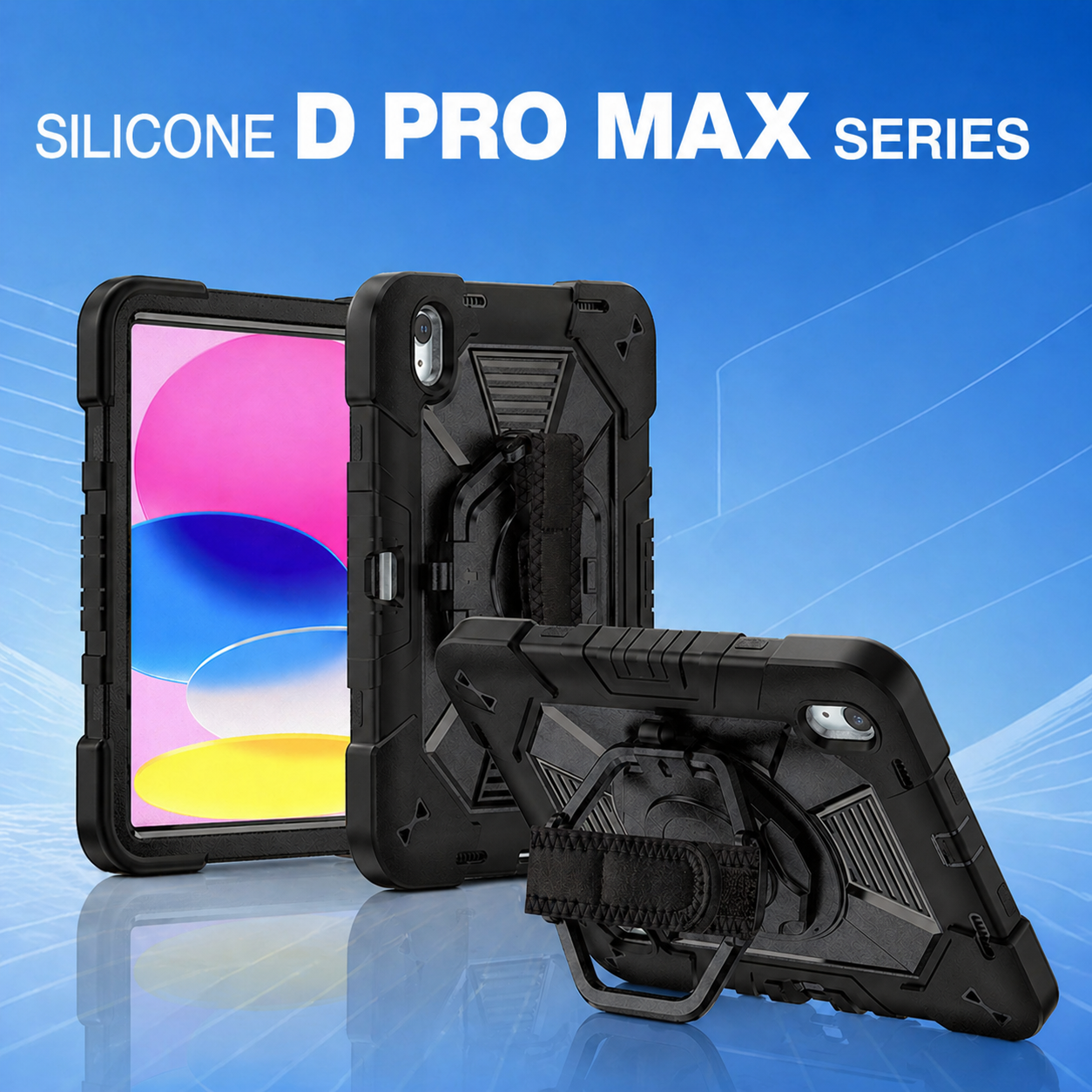
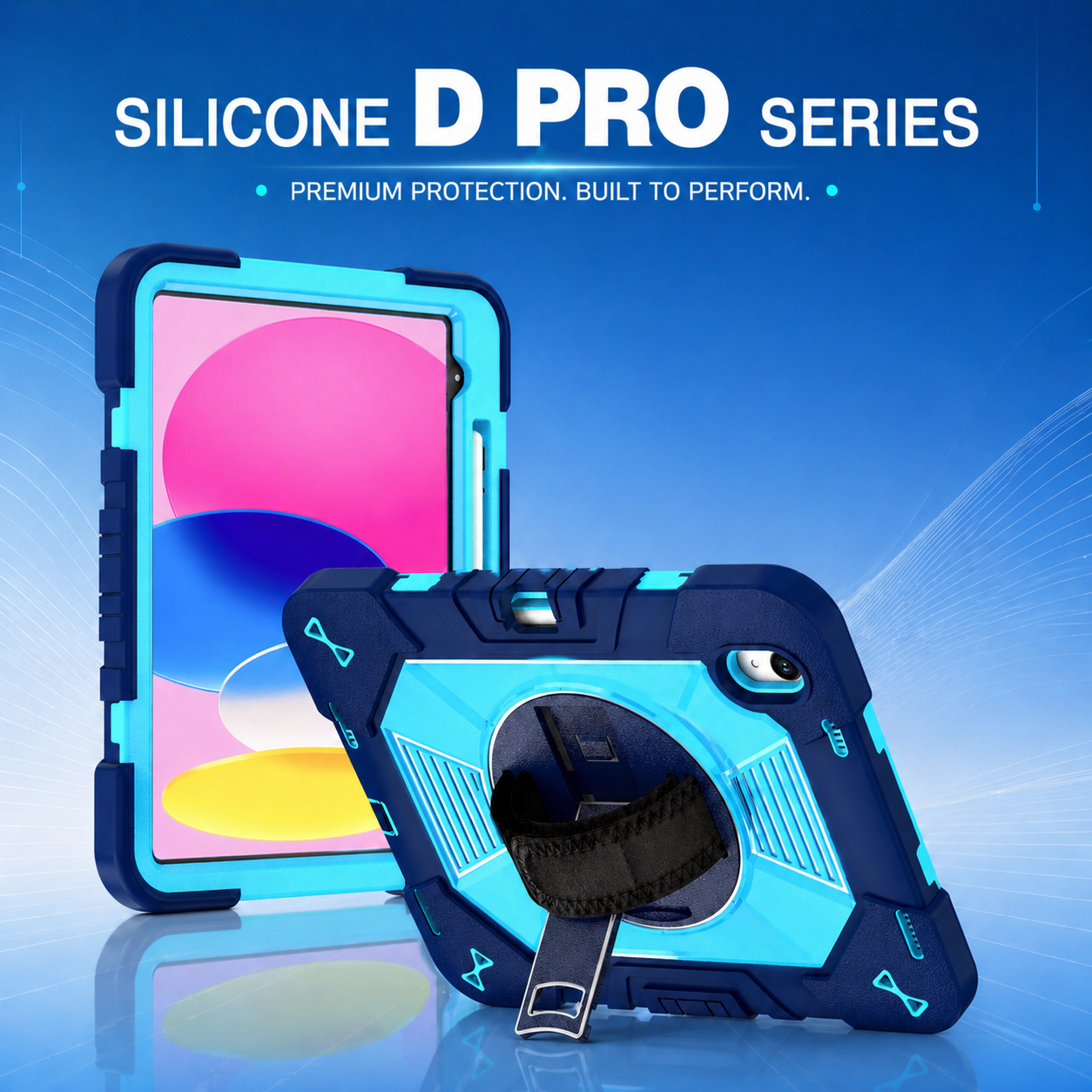
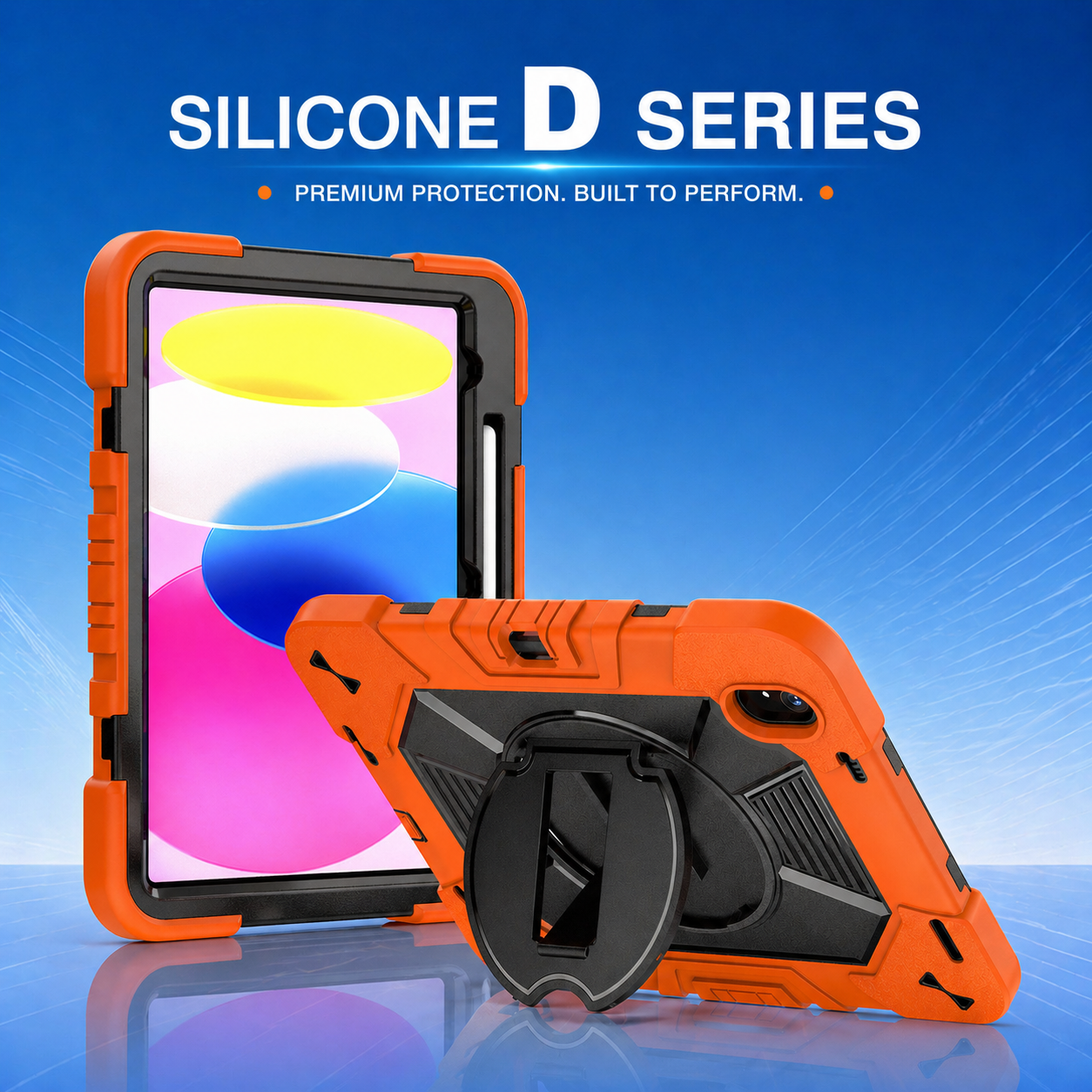

PC and Silicone Architecture for Three-Layer Heavy-Duty Tablet Cases
Multi-layer rugged cases are often described by their materials, but their real performance comes from the way those materials are arranged. A hard polycarbonate shell, a flexible silicone or elastomer layer, and a front retention frame can work together as a coordinated protection system. Each layer controls a different failure mode: deformation, impact acceleration, screen contact, and device movement. The design challenge is to make the layers cooperate without adding unnecessary size or creating assembly problems.
1. The Role of Polycarbonate
Polycarbonate provides the structural backbone. It helps the case resist bending, puncture, and localized pressure from tools, carts, or other equipment. It also stabilizes the tablet so the softer layer does not stretch excessively. Reinforcing ribs can increase stiffness without requiring a solid, heavy wall, while carefully placed cutouts preserve access to ports, cameras, microphones, and speakers.
In a PC+Silicone tablet case, the rigid component should distribute impact energy away from a single corner or edge. The geometry of the shell is therefore as important as its nominal thickness. Curved transitions, reinforced bridges, and controlled flex regions can reduce stress concentration and help prevent cracking during repeated drops.
2. The Silicone Cushioning Layer
Silicone or a similar soft elastomer surrounds vulnerable areas and creates a compliant interface between the tablet and the hard shell. During impact, it deforms to absorb energy and reduce the force transmitted to the device. It also prevents hard plastic from rubbing against the tablet’s housing, which can cause cosmetic damage over time.
Material hardness must be matched to the application. A very soft layer may provide good initial cushioning but allow too much movement. A very hard layer may hold the device securely but transfer higher forces. Designers often vary thickness and texture by location, adding larger cushions at corners and thinner sections near buttons or connectors.
3. The Third Layer: Front Retention and Screen Protection
The front frame completes the enclosure. It locks the device into the back assembly and forms a raised edge around the display. This bezel helps keep the glass away from flat surfaces and can provide additional protection during face-down drops. Depending on the use case, the front frame may include a transparent screen protector, an open-screen design, or a replaceable protective film.
A properly engineered 3 layers heavy duty rugged tablet case should maintain even pressure around the perimeter. Excessive pressure can affect buttons, create stress near the display, or make installation difficult. Insufficient pressure can allow the tablet to shift during impact. Tight dimensional control across all three layers is essential for consistent performance.
4. Mechanical Connections Between Layers
Layers that separate during a drop cannot protect effectively. Manufacturers use snap features, wraparound edges, locking tabs, screws, or overmolded connections to keep the structure together. These connections must survive repeated installation, cleaning, accessory use, and temperature changes. They should also be designed so service teams can install or remove the case without damaging the tablet.
Mechanical interlocks are often more reliable than depending only on adhesive. Adhesives can weaken under heat, moisture, chemicals, or long-term stress. When bonding is required, surface preparation and material compatibility must be validated during development.
5. Integrating Functional Accessories
Heavy-duty cases frequently include a rotating hand strap, kickstand, shoulder strap, vehicle mount interface, or stylus holder. These features create additional loads that must travel through the layered structure. A hand strap used by a warehouse worker may be pulled thousands of times, while a kickstand may experience repeated bending and desk impact.
Accessory attachment points should connect to reinforced regions of the polycarbonate shell, not only to the soft outer layer. Metal pins, molded bosses, or load-spreading plates can increase durability. At the same time, these components should not create hard contact points against the tablet.
6. Thermal and Environmental Considerations
Different materials expand and contract at different rates. Temperature cycling can create gaps, warping, or internal stress if tolerances are not planned carefully. Designers must account for hot vehicles, cold outdoor work, warehouse temperature changes, and heat generated by charging or processor-intensive applications.
Cleaning chemicals, UV exposure, oils, and dust may also affect the layers differently. Silicone may retain its flexibility while a poorly selected hard shell becomes brittle, or the shell may remain stable while the soft layer discolors. Validation should examine the complete assembled case rather than testing each material in isolation.
7. Manufacturing Precision and Quality Control
Tooling accuracy determines whether the layers align correctly. Warpage, shrinkage variation, flash, or inconsistent hardness can change the fit. Manufacturers should control incoming resin, molding temperature, cycle time, and post-molding inspection. Functional gauges and assembly tests can identify problems before full production.
#HardwareInnovation in protective accessories depends on disciplined engineering rather than cosmetic complexity. A successful three-layer case combines structural support, controlled cushioning, secure retention, and practical accessories in one repeatable product. When these elements are balanced, the result is strong protection that remains comfortable and efficient for daily use.
The next article examines how rugged protection changes across education, healthcare, and warehouse environments.






.png)
+86 13422271740
.png)
info@tongmeitech.com
.png)
No. 34, Mashe Section, Guihe Road, Lishui Town, Foshan, Guangdong, China